
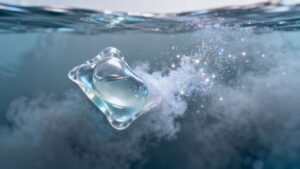
Laundry pods are super convenient, right? Just toss one in and you’re good to go. But have you ever stopped to think about what happens to that little plastic-like film after it dissolves? It turns out, there’s a lot more to it than just disappearing down the drain. We’re going to unpack the whole story about these pods and what they might be doing to our environment, especially when it comes to microplastics. Let’s get into it.
Key Takeaways
- Laundry pods often use a water-soluble plastic called Polyvinyl Alcohol (PVA) for their packaging. This PVA film is designed to dissolve in water during the wash cycle.
- While PVA dissolves, it doesn’t always fully biodegrade. Studies suggest that a significant portion of PVA persists in waterways and soil as microplastic pollutants.
- The production of PVA requires energy and chemicals, and its presence in the environment, even after dissolving, raises concerns about its long-term impact on ecosystems and potentially human health.
- Wastewater treatment plants are not always equipped to fully break down PVA, leading to its release into the environment in various forms, including microplastic particles.
- Consumers can make more informed choices by looking for PVA-free laundry alternatives, supporting brands with transparent environmental claims, and being aware of the potential issues associated with dissolvable plastic packaging.
Understanding PVA And Its Role In Laundry Products
What Is Polyvinyl Alcohol (PVA)?
PVA, or Polyvinyl Alcohol, is a synthetic polymer. Think of it as a type of plastic, even though it’s designed to dissolve in water. It’s made using processes that involve fossil fuels and energy, which isn’t exactly a green start. While it’s not a traditional plastic like the kind you see in bottles, it’s still a polymer that can break down into smaller pieces. In the U.S. alone, billions of laundry and dishwasher pods are used each year, and many of them use PVA as their outer film.
How Detergent Companies Utilize PVA
Detergent companies use PVA primarily as a film to wrap around laundry and dishwasher pods. This dissolvable film holds the concentrated detergent inside, making it super convenient for users – just toss a pod in the wash. It’s important to note that the PVA film itself doesn’t actually do any of the cleaning; its sole purpose is to contain the detergent. This convenience, however, comes with questions about its environmental fate once it goes down the drain. Some brands are starting to explore alternatives, but PVA remains a common choice for its ease of use and effectiveness in product design.
Key Properties That Make PVA Appealing
So, why do companies like using PVA? Well, it has a few key characteristics that make it a good fit for certain products. For starters, it’s water-soluble, meaning it dissolves when it comes into contact with water, which is perfect for a product that goes into a washing machine. It’s also quite strong as a thin film, able to hold its shape and contents without breaking apart too easily during handling and transport. This combination of dissolving when needed and staying intact until then is what makes it so useful for single-use items like detergent pods. It’s also relatively inexpensive to produce, which is always a plus for manufacturers.
The convenience of PVA-based products is undeniable, but it’s worth considering what happens after that convenience is used up. The journey of PVA from your washing machine to the environment is complex and not fully understood.
Here’s a quick rundown of why PVA is chosen:
- Water Solubility: Dissolves easily in water, which is the primary function for laundry and dishwasher pods.
- Film Strength: Can be made into thin, durable films that hold product securely.
- Cost-Effectiveness: Generally an economical choice for manufacturing.
- Versatility: Can be used in various forms, from thin films to fibers.
Do Laundry Pods Release Microplastics?
So, the big question on everyone’s mind: do those convenient little laundry pods actually break down into microplastics? It’s a bit of a tangled mess, honestly. The main component in the film that holds the detergent is called Polyvinyl Alcohol, or PVA. Companies often say it dissolves completely in water, and for the most part, it does. But here’s where things get tricky.
The Dissolving Dilemma: PVA’s Fate In Water
PVA is designed to be water-soluble. You toss a pod in the wash, the film dissolves, and the detergent is released. Simple, right? Well, the science behind it suggests that under normal washing conditions, the PVA film breaks down into smaller molecules. However, the exact breakdown process and what those smaller molecules are can be a point of debate. Some research indicates that while it dissolves, it doesn’t necessarily disappear without a trace. It’s not like it vanishes into thin air.
PVA’s Persistence As Microplastic Pollutants
Here’s the core of the concern: while PVA itself isn’t technically a microplastic when it’s manufactured, there’s worry that its breakdown products could behave like them, or that incomplete dissolution could leave behind tiny fragments. Think of it like a sugar cube dissolving in water – it disappears, but the water is now slightly different. With PVA, the concern is whether those
The Environmental Footprint Of PVA Production
Resource Extraction And Energy Consumption
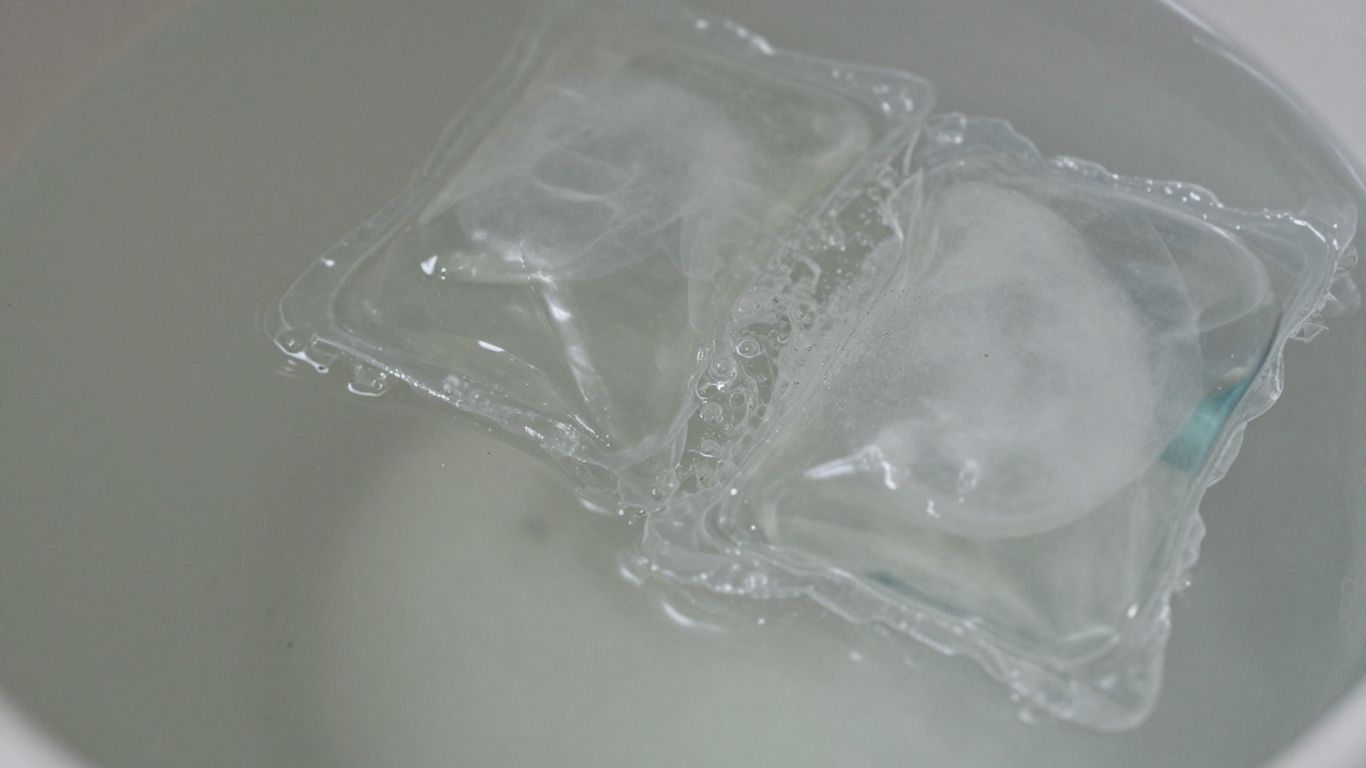
Making polyvinyl alcohol (PVA) isn’t exactly a walk in the park for the planet. It all starts with raw materials, which often means digging up fossil fuels. Think petroleum – not exactly a renewable resource. This extraction process itself can cause environmental disruption. Then comes the manufacturing. Producing PVA is an energy-intensive affair, requiring significant amounts of electricity. This energy often comes from sources that release greenhouse gases, contributing to climate change. It’s a whole chain of events that uses up resources and puts a strain on our environment before the PVA even gets turned into a laundry pod film. The energy needed for PVA production is a major part of its environmental cost.
Chemicals Used In PVA Manufacturing
Beyond just energy, the creation of PVA involves a cocktail of chemicals. These substances are necessary for the chemical reactions that transform raw materials into the final polymer. While manufacturers aim for efficiency, there’s always a risk of these chemicals, or byproducts from their use, escaping into the environment. This can potentially affect air and water quality if not managed with extreme care. The specific chemicals and processes can vary between manufacturers, but the general picture involves chemical transformations that need careful oversight to minimize pollution.
Comparing PVA’s Impact To Traditional Plastics
When we look at PVA, it’s often held up as a better alternative to traditional plastics, like those made from petroleum. And in some ways, it is. The production of PVA generally uses less energy and fewer harmful chemicals compared to, say, polyethylene. However, it’s not a perfect solution. PVA still relies on fossil fuels for its creation, and as we’ve discussed, the manufacturing process has its own environmental considerations. It’s a bit of a trade-off. While it might be a step away from persistent plastic waste, its production footprint still matters. It’s important to remember that even so-called ‘greener’ materials have an impact, and we need to keep looking for even better options. PVA film is presented as a sustainable alternative, but its production is still a factor.
The journey from raw materials to a dissolvable PVA film involves significant energy input and chemical processes. While it may offer advantages over some traditional plastics, its production footprint, including resource extraction and potential chemical releases, cannot be ignored when assessing its overall environmental impact. Continuous improvement in manufacturing efficiency and a search for truly sustainable alternatives remain important goals.
PVA Biodegradability: A Closer Look
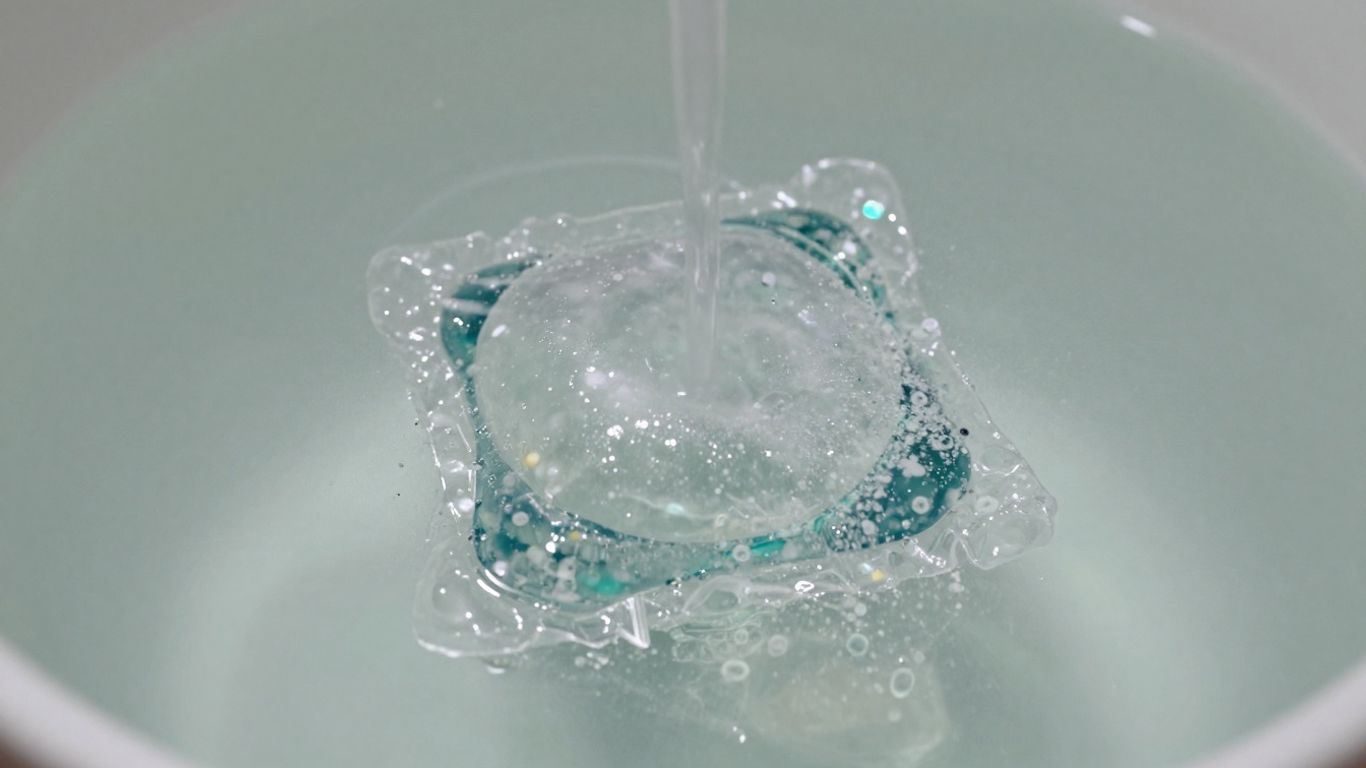
So, we know PVA dissolves in water, which is why it’s used in those convenient laundry pods. But does dissolving mean it’s gone for good? That’s the million-dollar question, and the answer is a bit more complicated than you might think.
Conditions Required For Complete Biodegradation
While PVA is often marketed as biodegradable, this label can be a little misleading. For PVA to truly break down into harmless components like water and carbon dioxide, it needs a very specific set of circumstances. Think of it like needing the right ingredients and the right oven temperature for a cake to bake properly.
- Specific Microorganisms: Certain types of bacteria and enzymes are required to break down the PVA polymer chains. These aren’t always present in every environment.
- Sufficient Time: The process takes time. Wastewater treatment plants, for example, might not hold the water long enough for complete degradation.
- Optimal Environment: Factors like temperature, moisture, and oxygen levels play a big role. Industrial composting facilities can provide these conditions, but your home washing machine or a natural river likely can’t.
The reality is that PVA’s breakdown is highly dependent on the environment it ends up in.
Challenges In Wastewater Treatment Plants
Most wastewater treatment plants (WWTPs) in the U.S. aren’t quite equipped to handle PVA effectively. While some PVA does break down, a significant portion doesn’t. This is a big part of why concerns about PVA as a microplastic pollutant are growing. An estimated 17,000 to 21,000 metric tons of PVA are discharged into U.S. wastewater annually, raising concerns about its environmental persistence. This means a lot of it ends up in our waterways.
Here’s a simplified look at what happens:
- Primary Treatment: This stage removes larger solids. Water-soluble PVA mostly passes through, still attached to the water molecules.
- Secondary Treatment: This is where most biodegradation happens. However, the specific microbes needed for PVA aren’t always present, or the water doesn’t stay long enough for the process to complete.
- Tertiary Treatment: If PVA survives the first two stages, it’s released with the treated water or as biosolids.
Even when treated, a substantial amount of PVA can be released back into the environment, either in the water or in the sludge that’s sometimes used as fertilizer. This means it can end up in our rivers, lakes, and even our soil.
The Difficulty In Monitoring PVA’s Environmental Impact
Because PVA can persist in the environment, figuring out exactly how much is out there and what it’s doing is tough. There isn’t a lot of research focused on tracking PVA’s biodegradability in natural settings like oceans or soil. This lack of data makes it hard to fully grasp its long-term impact on ecosystems and wildlife. It’s like trying to count grains of sand on a beach – it’s a massive undertaking with limited tools. This makes it challenging to assess its role as a pollutant and develop effective solutions. Choosing PVA-free laundry options is one way consumers can try to reduce their contribution to this ongoing issue.
Beyond The Pods: Other Products Containing PVA
It turns out laundry pods aren’t the only place you’ll find this water-soluble plastic. Polyvinyl Alcohol, or PVA, is showing up in a surprising number of everyday items. Because it dissolves in water, manufacturers find it super convenient for all sorts of applications. Think about it: a material that can be formed into a film, stick things together, and then just disappear when it gets wet? That’s a pretty neat trick for product design.
PVA In Personal Care And Household Items
In the personal care aisle, PVA pops up in things like shampoo and conditioner bottles, body wash packaging, and even some lotions. The idea is often to create single-use portions or to provide a barrier. You might also find it in household cleaners, sometimes as a film that dissolves when you add water to make your cleaning solution. It’s also used in things like disposable coffee cups and as a coating for certain fabrics. The convenience factor is high, but the environmental question of where all that dissolved plastic goes remains.
Applications In Food And Medical Industries
This might be the most eyebrow-raising part. PVA’s use extends into the food industry, where it can act as a thickener or a moisture barrier. You might encounter it in processed meats, breakfast cereals, or even yogurt and ice cream. It’s also used in things like grease-proof paper for food packaging. In the medical field, PVA is found in things like capsule casings for pills, eye drops, and even as a component in some blood bags. Its ability to dissolve or form protective layers makes it useful, but again, the environmental fate of these materials is a concern.
Industrial Uses Of Water-Soluble PVA Film
Beyond consumer goods, PVA has a significant industrial footprint. It’s used in adhesives, as a coating for printing toners, and in various packaging solutions. For example, water-soluble PVA films are employed for things like packaging for detergents or other chemicals, where the packaging itself is meant to be added directly to a process and dissolve. This makes handling messy or hazardous substances easier and cleaner. However, the sheer volume of PVA used across all these sectors means a substantial amount is entering our wastewater systems, and eventually, our environment, often in the form of microplastics.
While PVA’s water-solubility is its main selling point for product design, it’s also its biggest environmental drawback. Dissolving doesn’t equate to disappearing. The polymer breaks down into smaller pieces that persist, accumulating in our waterways and soil, with consequences we’re only beginning to understand.
It feels like everywhere you look, products are being advertised as "eco-friendly" or "natural." Laundry pods and sheets are no exception, often marketed with claims that make them sound like a perfect solution for a clean home and a clean planet. But sometimes, these claims don’t quite add up, and that’s where greenwashing comes in. It’s basically when a company tries to make its products seem better for the environment than they actually are, often by leaving out important details or using vague language.
Identifying Misleading Environmental Claims
One of the biggest red flags is when brands aren’t upfront about what their products are made of. For instance, many laundry sheets are made from Polyvinyl Alcohol (PVA), a synthetic plastic derived from fossil fuels. Some companies might try to spin this by saying it’s "plant-based" or made from "natural vegetable oil film," which just isn’t true. The Australian Competition and Consumer Commission defines greenwashing as using claims or omitting information that makes a product appear more environmentally sound than it is. It’s important to look past the buzzwords and dig a little deeper into the actual ingredients and manufacturing processes.
The Truth About "Plant-Based" Or "Natural" Claims
When a product is labeled "plant-based" or "natural," it’s easy to assume it’s automatically good for the environment. However, this isn’t always the case, especially with PVA. While PVA film is designed to dissolve, it’s a synthetic plastic, not a natural substance. The process of breaking down PVA requires specific microbes found in wastewater treatment environments, and it doesn’t just disappear instantly. Some brands might highlight that their packaging is plastic-free, which is great, but they might not mention that the product itself is wrapped in a plastic film. This kind of selective information can be misleading.
Consumer Awareness And Regulatory Scrutiny
Thankfully, consumers are becoming more aware of these practices, and regulators are starting to pay attention too. News outlets are beginning to cover how plastic can hide in supposedly eco-friendly laundry products, and cities are even considering crackdowns on certain types of laundry solutions. This increased scrutiny is a good thing because it pushes companies to be more honest about their environmental impact. It also means we, as consumers, have more power to make informed decisions. By asking questions and looking for transparency, we can support brands that are genuinely committed to sustainability rather than just appearing to be.
- Look for full ingredient disclosure: Does the brand clearly list all components, including the film material?
- Research the "biodegradability" claims: Understand the conditions required for the material to break down.
- Consider the source of materials: Is the PVA derived from fossil fuels or a more sustainable source, if applicable?
- Check for third-party certifications: Reputable eco-labels can offer an extra layer of assurance.
The push for greener cleaning products is understandable, but it’s vital to separate genuine environmental progress from clever marketing. We need to be critical consumers, questioning claims and seeking out brands that offer real transparency about their products’ lifecycle and environmental footprint.
Sustainable Alternatives To PVA-Based Laundry Solutions
So, we’ve talked about PVA and why it’s in those convenient laundry pods. But what if you’re looking to ditch the plastic film altogether? Good news – there are definitely other ways to get your laundry clean without relying on PVA. It’s all about finding what works for you and your household while being kinder to the planet.
Exploring PVA-Free Detergent Options
Lots of companies are stepping up with laundry solutions that skip the PVA film. You can find detergents in different forms, like concentrated liquids in metal bottles or dissolvable sheets. These options often cut down on packaging waste and the heavy shipping of water-based formulas. The goal is to get effective cleaning power without the microplastic worry.
Some brands are really focusing on making their products as eco-friendly as possible. For instance, you can find laundry sheets that are completely plant-based and vegan, cutting out plastic waste and reducing the carbon footprint from shipping heavy liquid detergents. It’s a pretty neat idea, right?
The Benefits Of Natural And Homemade Products
Thinking about going natural? That’s a great path to explore. You can find laundry powders and soaps made with simpler ingredients, often free from synthetic chemicals and palm oil. Some people even make their own laundry detergent at home, which can be a really cost-effective and environmentally friendly choice. You control exactly what goes in, and you can often use compostable packaging or just reuse your own containers.
Here are a few ideas:
- Soap Nuts: These are actually berries that contain saponin, a natural cleaning agent. You just toss a few into your wash.
- Laundry Powder: Many brands offer powders in cardboard or compostable packaging. You can also find recipes online to make your own.
- Concentrated Bars: Some companies are making solid laundry bars that you can lather up or dissolve in water before adding to your machine.
Making your own cleaning products or choosing simple, natural alternatives means you’re often avoiding a whole host of chemicals that can end up in our waterways. Plus, it usually means less packaging waste, which is a big win.
Other Plastic-Free Laundry Swaps
Beyond just the detergent itself, there are other small changes you can make. Think about using reusable dryer balls instead of single-use dryer sheets. They help soften clothes and reduce drying time, and you can use them for years. If you have a front-loading washing machine and are worried about powders, just dissolve the powder in a bit of water before adding it to the drum. It’s all about finding practical ways to reduce plastic and chemical use in your laundry routine. Making these switches might seem small, but collectively, they add up to a significant positive impact on the environment.
So, What’s the Verdict on Laundry Pods and Microplastics?
Alright, so we’ve looked into these laundry and dishwasher pods, and it turns out that the plastic film they’re wrapped in, called PVA, isn’t quite the disappearing act we might have thought. While it dissolves in water, it doesn’t always break down completely. This means bits of plastic, or microplastics, can end up in our waterways and soil. It’s a bit of a bummer because these pods are super convenient, right? But convenience sometimes comes with a hidden cost. The good news is, there are other ways to get your laundry clean. More and more companies are offering PVA-free options, like powders or dissolvable strips that don’t rely on this type of plastic. It might take a little extra effort to find them, but making the switch could be a small step towards a cleaner environment for all of us. It’s all about weighing the options and choosing what feels best for your home and the planet.
Frequently Asked Questions
Are laundry pods really plastic?
Yes, the wrapper around laundry pods is made of a material called Polyvinyl Alcohol, or PVA. While it’s designed to dissolve in water, it’s still a type of plastic. Think of it like a tiny plastic bag that holds your detergent.
Does PVA completely disappear after dissolving?
Not always. When PVA dissolves, it breaks down into smaller pieces. While it might not be visible, studies suggest that a significant amount of it can remain in our water and soil as microplastics. It doesn’t truly vanish.
Is PVA bad for the environment?
PVA can be concerning for the environment. Because it doesn’t always break down completely, it can end up as microplastic pollution in our rivers, lakes, and soil. This can potentially harm wildlife and even end up in the food we eat.
Can wastewater treatment plants get rid of PVA?
Wastewater treatment plants aren’t always equipped to fully remove PVA. While they can break down some of it, a lot can pass through. Specific conditions and special helpers, like certain tiny organisms, are needed for PVA to break down completely, and these aren’t always present.
Are there laundry products that don’t use PVA?
Absolutely! Many companies are now offering laundry solutions that are PVA-free. You can find laundry powders, soap bars, or even dissolvable laundry sheets made from different materials. It’s worth looking for these alternatives to reduce plastic use.
What does ‘greenwashing’ mean when it comes to laundry products?
Greenwashing is when companies make products seem more eco-friendly than they really are. For example, some might say their laundry sheets are ‘natural’ or ‘plant-based’ when they are actually made from PVA, which is a type of plastic derived from fossil fuels. It’s important to look closely at the ingredients and claims.