

The holiday season is almost here, and that means it’s time to think about the Christmas tree. But this year, maybe we can do things a little differently. Instead of just grabbing the first tree we see, let’s consider how we can make our holiday centerpiece a bit kinder to the planet. We’ll look at some choices that are good for the environment, from real trees to creative alternatives, all while keeping that festive spirit alive.
Key Takeaways
- Choosing a real, locally grown Christmas tree is often a better environmental choice than an artificial one, especially if it’s from a sustainable farm.
- Potted Christmas trees offer a way to enjoy a live tree indoors and then plant it outside, giving it a longer life.
- DIY trees made from reclaimed wood or other household items are a creative and waste-reducing option.
- Decorating with upcycled ornaments and natural materials helps minimize the environmental impact of your tree.
- Properly disposing of your real Christmas tree through recycling or composting benefits the environment.
Exploring Your Environmentally Friendly Christmas Tree Options

So, the holidays are rolling around, and you’re thinking about that big, festive tree. It’s a pretty central part of the whole celebration, right? But these days, more and more people are wondering how to keep things festive without being too hard on the planet. It’s a good question to ask, and thankfully, there are some solid ways to go about it. We’re going to look at the main choices you’ve got for your holiday centerpiece, weighing the good and the not-so-good from an eco-friendly angle. Choosing the right tree can actually make a difference.
The Enduring Appeal of Real Christmas Trees
There’s just something about a real Christmas tree, isn’t there? That fresh pine scent, the way the branches hold ornaments just right. Real trees are a renewable resource, which is a big plus. Many tree farms are pretty good about replanting, so for every tree cut, more are grown. This supports local economies and keeps forests healthy. When you buy a real tree, especially one from a local farm, you’re often cutting down on the transportation emissions too. Plus, when the holidays are over, they can be recycled into mulch or compost, giving them a second life. It’s a nice way to go if you want that classic holiday feel.
Understanding the Impact of Artificial Trees
Artificial trees seem like a simple solution, and for some, they are. You pull it out of the box year after year, and you don’t have to worry about needles everywhere. However, most artificial trees are made from plastics and metals that don’t break down easily. If you end up throwing one away after a few years, it can sit in a landfill for a very, very long time. The manufacturing process itself also uses energy and resources. If you already have an artificial tree, the most eco-friendly thing to do is use it for as long as possible – some can last for 10 to 20 years! Buying a high-quality one that’s built to last is key if you’re considering this route. It’s all about making it work for you over the long haul.
Considering a Living Tree for the Holidays
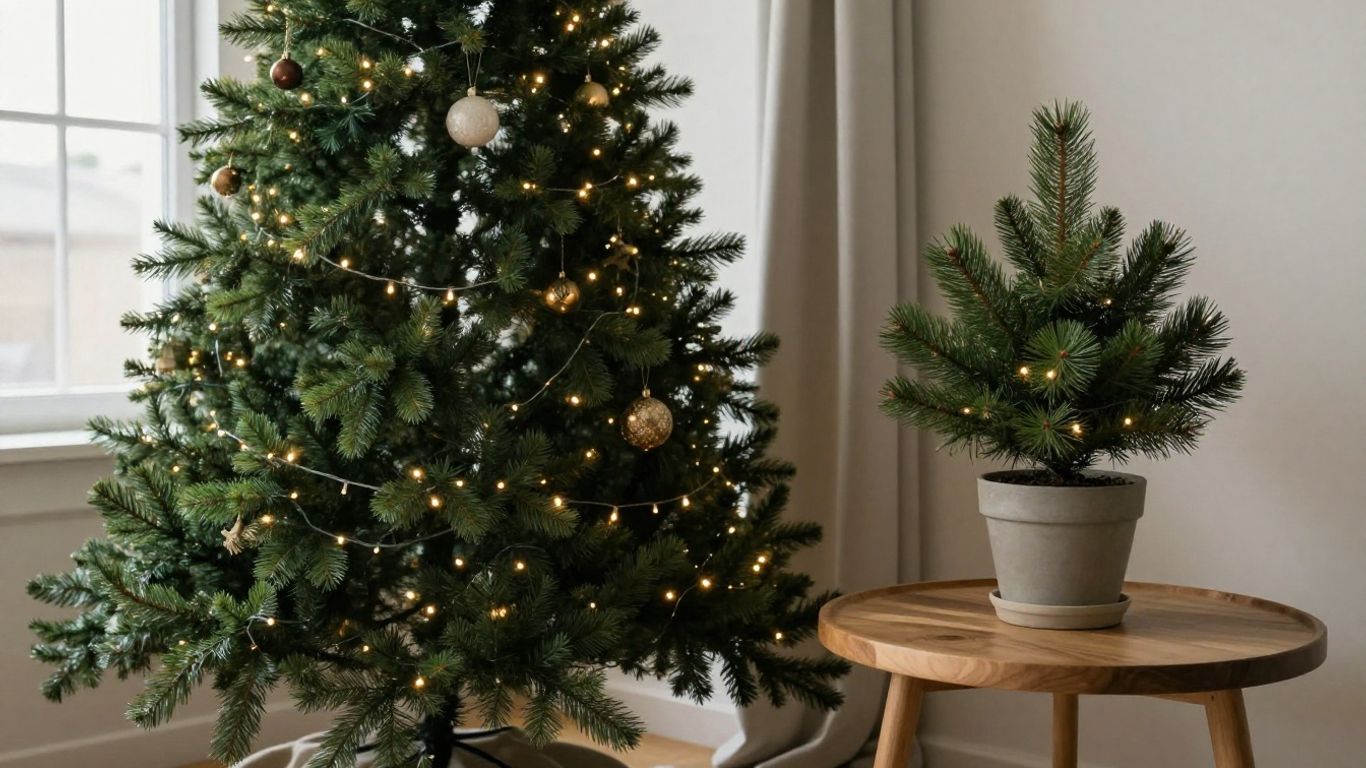
This is where things get really interesting. A living Christmas tree, one that’s still in a pot, offers a fantastic compromise. You get the joy of a real tree indoors, and then, the best part: you can plant it outside after the holidays. It’s a tree that keeps on giving! You’ll want to pick a species that does well in your local climate and has the right soil and light conditions for planting later. Keeping it watered is important, and you need to let it adjust gradually back to outdoor temperatures before planting. It’s a beautiful way to add to your yard while still enjoying the holiday spirit. This option really does reduce waste and contribute to a greener environment.
Making a conscious choice about your Christmas tree doesn’t mean sacrificing holiday cheer. It’s about finding a balance that feels right for your family and your values. There are many paths to a festive and responsible celebration.
Sustainable Choices for Your Holiday Centerpiece
Opting for Locally Sourced Real Trees
Going local for your Christmas tree can actually make a bigger impact than you might think. When you buy a tree grown near your area, you’re supporting the regional economy and shrinking the carbon footprint that comes with shipping trees long distances. Most local farms also replace every tree they cut, and many operate with eco-friendly methods, like skipping harmful pesticides and replanting right away. Before picking your tree, ask the grower where and how the trees are grown. If you have the choice between a big box store and a neighborhood farm, the farm is the greener bet every time.
Here are a few quick pointers for choosing a local tree:
- Ask about the farm’s growing practices—avoid trees grown with a lot of chemicals
- Carry your own reusable tarp or blanket instead of a plastic wrap
- Bring a vehicle suitable for hauling the tree without excess plastic
The Benefits of Potted Christmas Trees
Potted trees are my personal favorite for the holidays. You get to decorate them like any other tree indoors, but after your celebrations, you can plant them outside or donate to a community green space. It feels less wasteful, and you’re literally growing your holiday memories for years to come. Just remember: keeping your potted tree alive during the holiday can be a little different than with a regular cut tree.
- Keep the root ball moist, but not waterlogged.
- Place the tree away from direct heat sources.
- Limit the time indoors to about 7–10 days to avoid shocking the roots.
Table: Cut vs. Potted Tree Environmental Impact
| Feature | Locally Cut Tree | Potted Tree |
|---|---|---|
| Can be replanted? | No | Yes |
| Biodegradable? | Yes | Yes |
| Reusable each year? | No | If kept alive/growing |
| Compostable? | Yes | Yes (if not replanted) |
A potted Christmas tree can give you the classic look and feel of the season, but with a bonus: you’re planting for the future every year you celebrate this way.
Renting a Living Tree for the Season
Renting a tree takes the potted concept up a notch—no worrying about what to do with it after, and no digging in the yard if you’re not into gardening. Lots of plant nurseries or local eco-businesses now let you rent a living tree: they deliver it in a large pot, you decorate and enjoy it for a few weeks, and then it’s whisked away to be cared for (and hopefully grow bigger for the next season). It’s a win-win for minimal waste and maximum convenience.
What to expect if you rent a tree:
- Schedule your delivery well ahead—these trees go fast.
- Some businesses provide set-up and pick-up, while others are more DIY.
- Always follow the care guides provided (watering, indoor temperature) for the short time the tree is in your home.
Opting for a sustainable tree centerpiece isn’t just a trendy thing to do—it’s practical, meaningful, and honestly, can be a lot more fun than the old cut-and-toss tradition. This way, your holiday centerpiece tells a story that grows greener every year.
Creative and Eco-Conscious Tree Alternatives
So, you’re looking to shake things up this holiday season and ditch the traditional Christmas tree? That’s awesome! There are tons of cool ways to get that festive vibe without a standard fir or pine. It’s all about using what you have or getting a little crafty.
Crafting Your Own Wooden Christmas Tree
Forget chopping down a tree; why not build one? Using reclaimed wood is a fantastic way to give old materials a new life. You can find scrap wood from old projects, pallets, or even fallen branches. Arrange them in a triangular shape, stack them creatively, or build a simple frame. This DIY approach lets you customize the size and style to perfectly fit your space. It’s a project that’s surprisingly straightforward and results in a unique centerpiece.
DIY Trees from Reclaimed Materials
This is where your imagination can really run wild. Think beyond wood! You could stack old books to form a tree shape, using their spines as a natural decoration. Or, gather sturdy fallen branches from your yard or neighborhood, tie them together with twine or ribbon, and hang ornaments from them. Another idea is to create a "wall tree" by attaching ornaments directly to a decorative board or even your wall in a tree formation. It’s a great way to repurpose items and avoid the waste associated with traditional trees. You can find inspiration for sustainable decoration ideas that complement these alternative trees.
Unique Tree Designs Using Household Items
Who says a Christmas tree has to look like a tree? Get creative with everyday objects. You could string fairy lights in a tree shape on your wall, hang ornaments from a ladder, or even create a tree out of colorful scarves or fabric scraps. Consider using a large potted plant you already own and decorating it as your holiday centerpiece. The goal is to embrace the spirit of the season using items that are readily available, minimizing both cost and environmental impact. It’s about the festive feeling, not just the shape.
Decorating Sustainably for a Greener Holiday
Once you’ve picked out your perfect eco-friendly tree, the fun really begins with decorating! But even here, we can make choices that are kinder to the planet. Forget those plastic-wrapped baubles and glittery tinsel that shed microplastics everywhere. Instead, let’s get creative with what we have and what nature provides.
Upcycled Ornaments and Garlands
This is where you can really let your imagination run wild. Think about all the things you might normally toss out. Old fabric scraps can be cut into shapes and sewn or glued together. Even old maps or book pages can be rolled into beads or cut into festive shapes. Making your own decorations is a fantastic way to add personal meaning to your holiday display. It’s also a great activity to do with the kids, turning a simple craft session into a cherished memory.
Here are a few ideas to get you started:
- Paper Chains: Use old newspapers, magazines, or even junk mail. Cut them into strips and loop them together.
- Fabric Scraps: Sew or glue small fabric pieces into festive shapes like stars, hearts, or little stockings.
- Bottle Cap Art: Cleaned bottle caps can be painted and strung together for a unique garland.
- CD Ornaments: Old CDs or DVDs can be broken into pieces (carefully!) and glued onto cardboard shapes for a mosaic effect.
Natural Decorations for Your Tree
Nature offers some of the most beautiful and simple decorations. Think about what you can find on a walk in the park or your backyard (just be sure to collect responsibly!). Dried orange slices, pinecones, and cinnamon sticks not only look lovely but also add a wonderful scent to your home. You can even tie small bundles of herbs like rosemary with twine for a fragrant and attractive addition.
- Pinecones: Collect them and leave them as they are, or give them a light dusting of eco-friendly glitter if you must.
- Dried Citrus: Slice oranges, lemons, or grapefruit thinly and dry them in a low oven. They look beautiful and smell amazing.
- Cinnamon Sticks: Tie a few together with twine or ribbon.
- Twigs and Berries: Small, sturdy twigs can be incorporated, and if you have access to non-toxic berries (be careful with identification!), they can add a pop of color.
Avoiding Harmful Materials in Decorations
It’s easy to get caught up in the sparkle, but many common decorations are made with materials that aren’t great for the environment. Glitter, for instance, is essentially tiny pieces of plastic that end up polluting waterways. PVC plastic, often found in artificial garlands and some ornaments, is also a concern. When shopping, look for decorations made from natural materials like wood, glass, or metal, or opt for those made from recycled content. If you have older decorations, assess if they can be repaired or repurposed instead of replaced. Making your own decorations is often the best way to control the materials used.
When we choose decorations made from sustainable materials or upcycle items we already own, we’re not just making our tree look good. We’re also sending a message that we care about the health of our planet. It’s about finding joy in simplicity and creativity, rather than just consumption. This approach can make the holiday season feel even more special and meaningful.
Responsible Disposal of Your Christmas Tree
So, the tinsel is down, the carols have faded, and your beautiful real Christmas tree has served its festive purpose. Now what? Don’t just toss it to the curb and forget about it! There are plenty of ways to give your tree a second life and keep it out of the landfill.
Participating in Community Recycling Programs
This is probably the easiest and most common way to say goodbye to your tree. Many towns and cities organize special Christmas tree collection days or set up drop-off locations right after the holidays. They usually chip these trees into mulch or compost.
- Check with your local municipality: Look on their website or give them a call to find out about collection schedules and drop-off sites. Some places collect trees right from your curb on regular trash days, while others have designated spots.
- Look for community events: Sometimes garden centers, parks, or even fire stations will host tree recycling drives.
- Never leave your tree curbside outside of designated times: This can be a fire hazard and an eyesore.
Repurposing Your Tree for Mulch or Habitat
Your tree is more than just wood and needles; it can be a valuable resource for your garden or local wildlife.
- Mulch: If you have a wood chipper, you can turn your tree into mulch for your garden beds. This helps retain moisture and suppress weeds. If you don’t have a chipper, your community recycling program likely does this for you.
- Garden Edging: Larger branches can be cut and used to create natural borders for garden paths or beds.
- Wildlife Habitat: Place your tree in your yard after the holidays. It can provide a cozy shelter for birds and small animals during the cold winter months. You can even add some old birdseed to the branches.
Composting Your Real Christmas Tree
If you’re a keen composter, your Christmas tree can be a great addition to your pile. Breaking down your tree can add valuable organic matter to your compost.
- Chop it up: The smaller you can break down the tree (branches, trunk), the faster it will decompose. You can use loppers, a saw, or a wood chipper.
- Mix it in: Don’t just dump the whole tree on top. Mix the branches and trunk pieces with other compostable materials like kitchen scraps and leaves.
- Be patient: Like any compost, it takes time. You’ll eventually have nutrient-rich compost for your garden.
Even if you don’t compost yourself, the mulch created from recycled trees often ends up enriching local parks and community gardens, so your tree is still contributing to a greener environment.
Making Your Holiday Bright and Green
So, there you have it. Choosing a Christmas tree doesn’t have to be a tough decision for the planet. Whether you go for a real tree from a local farm, decide to plant a potted one in your yard later, or get super creative with wood or books, there are plenty of ways to have a festive tree without a big environmental cost. It’s all about thinking a little differently and making choices that feel right for you and for the Earth. Have a wonderful, and very green, holiday season!
Frequently Asked Questions
What’s the most eco-friendly type of Christmas tree?
Real Christmas trees are generally the most eco-friendly choice. They are a renewable resource, and many tree farms plant new trees after harvesting old ones. Plus, they can be composted or turned into mulch after the holidays, unlike artificial trees which are made of plastic and can take hundreds of years to break down.
Are artificial Christmas trees bad for the environment?
Artificial trees can have a bigger environmental impact because they’re usually made from plastic, which isn’t good for the planet. They also travel a long way from where they’re made to the stores. However, if you use an artificial tree for many, many years, like 20 or more, it can be a better choice than buying a new real tree every year.
What is a potted Christmas tree?
A potted Christmas tree is a live tree that’s grown in a container. You can bring it inside to decorate for the holidays. After Christmas, you can plant it in your yard or give it to someone who can plant it. This way, the tree keeps growing and helps the environment.
Can I rent a Christmas tree?
Yes, renting a Christmas tree is becoming a popular green option! Some companies let you rent a live potted tree for the holidays. They’ll deliver it to you, and then pick it up after the season to replant it. It’s a great way to have a real tree without the waste.
How can I decorate my tree sustainably?
To decorate sustainably, try using things you already have or making your own decorations. You can use natural items like pinecones or dried fruit, or create ornaments from recycled materials like old paper, fabric scraps, or even bottle caps. Avoid decorations with lots of glitter, as glitter is made of tiny plastic pieces that harm the environment.
What should I do with my real Christmas tree after the holidays?
Don’t just throw your real Christmas tree away! Many towns have recycling programs where they collect old trees to turn them into mulch for gardens or parks. Some places even use them to create habitats for wildlife. Composting your tree is another great way to give it a second life.